Smarter O&M with Temperature Data & Digital Twins
Smarter O&M with Temperature Data & Digital Twins
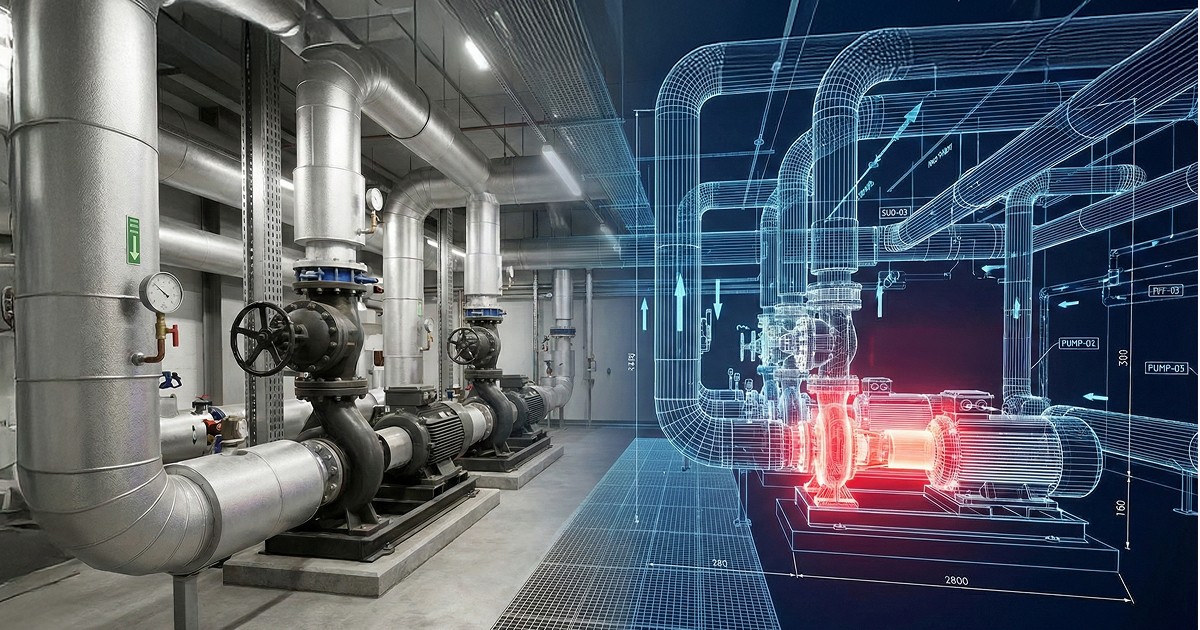
In today's rapidly evolving industrial landscape, traditional operations and maintenance (O&M) practices are being disrupted by Industry 4.0 technologies. Rather than relying on reactive repairs or scheduled inspections, modern asset-intensive facilities are embracing data-driven O&M and a powerful enabler of this shift is the integration of temperature analytics with digital twin technology
The Limitations of Traditional O&M
Historically, O&M teams have depended on periodic inspections, manual thermometers, or vibration sensors to assess asset health. While these methods work, they often detect issues late, when degradation has already impacted performance or caused costly downtime.
According to research, unplanned downtime costs industrial manufacturers an estimated $50 billion annually, with equipment failure being a leading cause. For many critical assets like pumps, motors, compressors, and rotating machinery, failures can arise from internal component stress and bearing degradation, not just system-level stress. Traditional condition monitoring methods can miss these localized thermal anomalies until they escalate into catastrophic failures.
This reactive or time-based maintenance model is not only costly but also inefficient: rather than servicing components when needed, maintenance teams may perform unnecessary checks, or worse, respond too late. What if we could see inside each component in real-time, predict its health trajectory, and act proactively before failure occurs?
Why Temperature Analytics Matter for Predictive Maintenance
Temperature is one of the most reliable early indicators of mechanical or electrical stress in industrial equipment. As components overheat, whether due to misalignment, friction, lubrication failure, bearing wear, or electrical overload, they often show thermal anomalies long before catastrophic failure.
Infrared Thermography (IRT) effectiveness: Infrared thermography detects bearing, gearbox, and motor faults weeks before failure, enabling proactive maintenance through accurate, non-contact thermal monitoring (Sapphire Technologies)
Machine Learning Integration: Integrating machine learning with infrared thermography boosts fault detection in induction motors and gearboxes, achieving over 94% accuracy with methods like CNNs and SVM. Smart sensors combine thermal data for diagnostics, with models such as 2D-DWT and PCA-SVM delivering superior performance. Hybrid algorithms on thermal datasets offer near-perfect recall, outperforming single classifiers.
Gas Turbine Monitoring: XGBoost on gas turbine thermal data achieves 97.2% accuracy in detecting faults, with thermocouple features enabling precise anomaly detection and superior reliability predictions. (DOAJ)
Early Detection Benefits: By continuously tracking heat patterns, it spots overheating connections, worn bearings, and insulation issues, catching up to 90% of electrical faults and 80% of mechanical problems before failure occurs.
These findings demonstrate that thermal signatures are not just diagnostic, they're predictive and actionable.
Digital Twins: The Backbone of Contextual Asset Monitoring
While temperature data is powerful on its own, its value multiplies exponentially when embedded into a digital twin, a virtual model that mirrors the physical system in real time with spatial and operational context.
What Digital Twins Provide:
Spatial awareness: 3D representation of assets via BIM (Building Information Modeling) or point cloud data
Real-time overlay: Operational parameters such as temperature, vibration, current draw, and pressure
Simulation testing: A digital twin’s key advantage is simulation, enabling virtual testing of real-world objects and systems before impacting the physical asset.
Historical context: Trend analysis and baseline comparisons
Predictive capability: Integration with machine learning and physics-based models
Asset hierarchy: Component-level granularity within complex systems
Studies in predictive maintenance have shown that digital twins transform predictive maintenance by providing real-time visibility and accurate degradation modeling, resulting in significantly better prediction accuracy and operational reliability.
Practical Implementation:
A digital twin of an induction motor was built using data-driven models and physics-based insights; integrated with a custom maintenance management system, it could predict remaining useful life (RUL) and detect faults before failure with 92% accuracy.
Advanced Methods:
Researchers developed a predictive digital twin using thermal imaging, dimensionality reduction techniques like Proper Orthogonal Decomposition (POD), and anomaly detection algorithms (e.g., Dynamic Mode Decomposition) to continuously monitor and forecast system behavior.
Computational Efficiency:
An emerging framework integrated reduced-order models (ROMs) with machine learning to simulate and predict thermal behavior in real time, offering both computational speed and prediction accuracy for large-scale industrial applications.
These advances validate a core truth: by combining temperature data with digital twin models, O&M teams can transform raw data streams into actionable intelligence.
How Temperature Analytics & Digital Twins Work Together in Modern O&M
Here's how this integration typically unfolds in a condition-based maintenance (CBM) system:
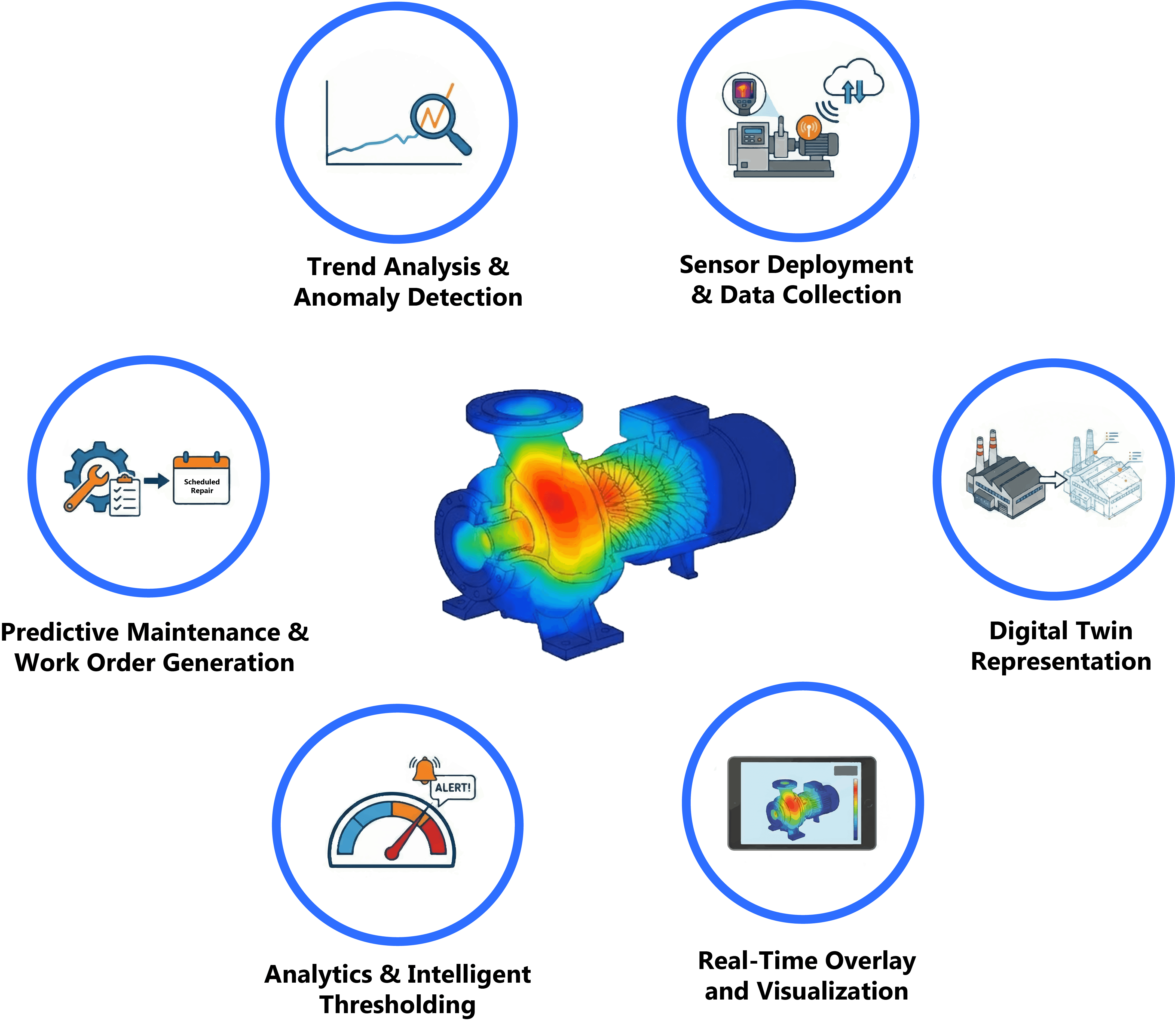
Step 1: Sensor Deployment & Data Collection
Smart thermal cameras, thermocouples, or infrared sensors capture per-component temperature data in real time. Depending on the asset criticality, other sensors (vibration accelerometers, current sensors, acoustic monitors) may also be deployed for multi-parameter condition monitoring.
Step 2: Digital Twin Representation
A BIM (Building Information Model) or laser-scanned point cloud is created to model the physical layout of the facility. Every critical component, pump bearing, motor casing, coupling, valve, transformer is labeled, georeferenced, and mapped within the digital environment.
Step 3: Real-Time Overlay and Visualization
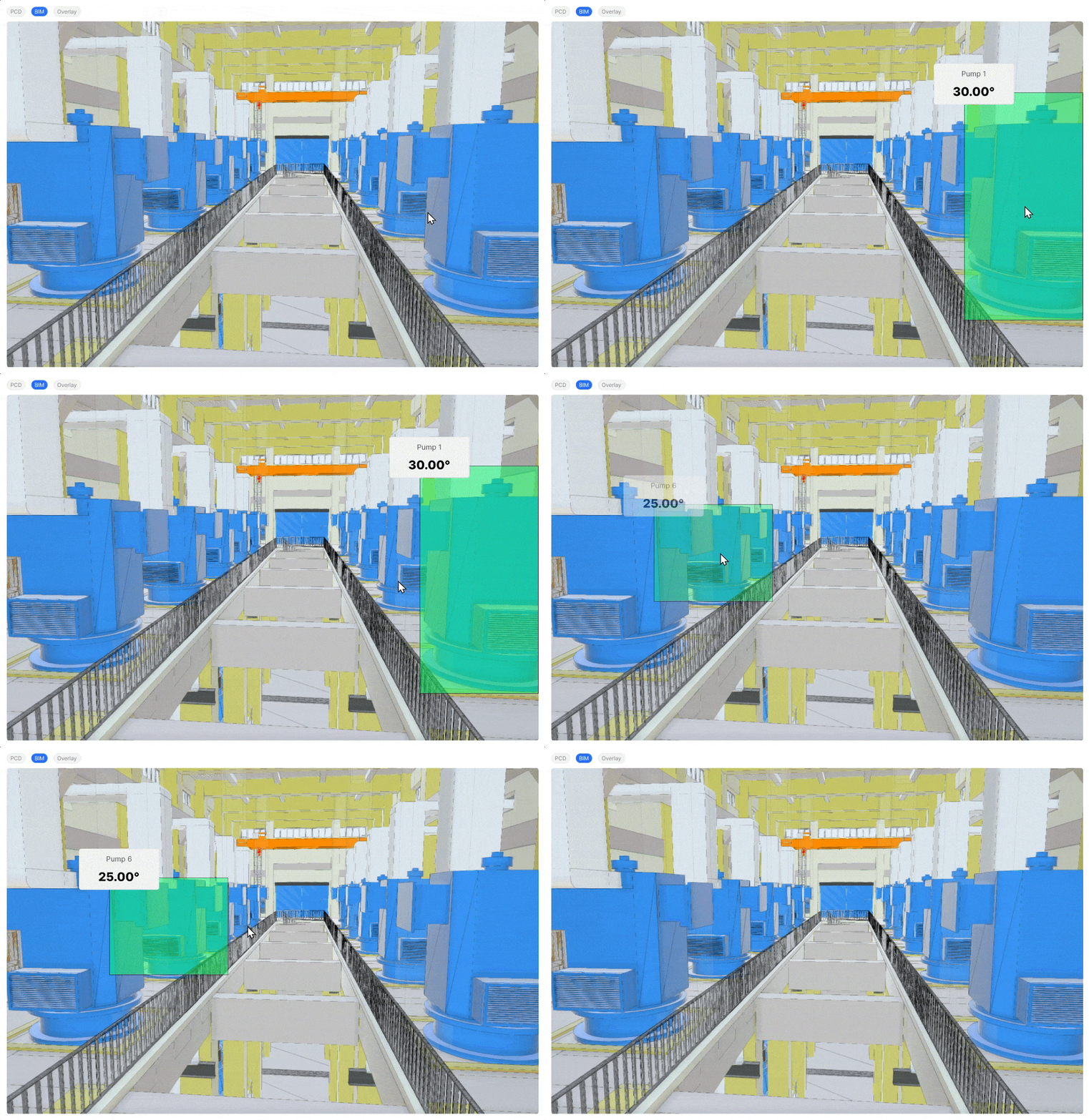
Temperature readings are overlaid on the digital twin interface. Operators view intuitive dashboards that show thermal gradients, component-level temperatures, heat maps, and live camera feeds or point cloud views all inside a unified digital environment accessible from desktop or mobile devices.
Step 4: Analytics & Intelligent Thresholding
Each component is assigned a custom temperature threshold based on manufacturer specifications, operational context, and environmental conditions. These may be:
Static thresholds: Pre-defined based on equipment specifications
Dynamic thresholds: Machine-learned from historical data patterns
Adaptive thresholds: Self-adjusting based on operating conditions (load, ambient temperature, duty cycle)
When a component's temperature crosses its threshold, automated alerts are triggered via email, SMS, or integration with CMMS (Computerized Maintenance Management Systems).
Step 5: Trend Analysis & Anomaly Detection
The system tracks temperature trends over time using time-series analytics. Sophisticated algorithms (including machine learning, ROMs, or physics-informed neural networks) learn normal thermal behavior for each component and detect:
Gradual drift patterns
Sudden anomalies
Cyclic variations
Predictive failure signatures
Step 6: Predictive Maintenance & Work Order Generation
Insights drive maintenance decisions: rather than reactive emergency repairs, teams can:
Plan targeted inspections during scheduled downtime
Order replacement parts proactively
Optimize operational parameters (speed, load, cooling)
Prioritize work orders based on criticality and risk
Periodic reports summarize trends, alert history, mean time between failures (MTBF), and overall equipment effectiveness (OEE).
Real-World Impact: Why This Matters for Industrial O&M
Adopting this data-driven O&M strategy delivers measurable business outcomes:
Early Fault Detection: Continuous heat monitoring detects overheating, worn bearings, and insulation issues, identifying up to 90% of electrical and 80% of mechanical faults before failure.
Reduced Unplanned Downtime: Predictive strategies cut downtime by 30-50% and boost equipment availability through proactive scheduling.
Cost Efficiency: Maintenance costs drop 18-25% versus traditional methods and up to 40% over reactive approaches by targeting needed repairs.
Targeted Maintenance: Precise alerts and visuals reduce diagnostic time by up to 70% in some cases, focusing technicians on specific components.
Extended Asset Lifecycle: Optimized conditions extend equipment life by 20-40%, minimizing wear from thermal stress.
Better Decision-Making: Real-time dashboards with temperature data, spatial context, and trend analytics give O&M managers actionable intelligence for resource allocation and capital planning
Improved Safety: Early detection of electrical hotspots and overheating equipment reduces fire risk and worker safety incidents
How Platforms Like SpatialSense Enable Modern O&M
A platform like SpatialSense is uniquely positioned to deliver this modern, data-driven condition monitoring model:
Component-level monitoring: Labels and tracks each part within a pump, motor, or complex machine, monitoring its temperature and status in real time
Custom threshold configuration: Enables tailored alerts per component based on asset criticality, operating context, and learned baselines
Visual data fusion: Overlays thermal images and sensor data onto BIM models and point cloud representations, creating an immersive digital twin experience
Unified dashboards: Provides operators with a single pane of glass view including live camera feeds, thermal heat maps, temperature trends, alert history, and predictive insights
Advanced analytics: Can be extended with machine learning algorithms, reduced-order thermal modeling, or physics-informed models for predictive anomaly detection and RUL estimation
Mobile accessibility: Field technicians can access the digital twin and thermal data from mobile devices during inspections
The Future of O&M is Data-Driven
The convergence of temperature analytics, infrared thermography, and digital twin technology represents a paradigm shift in how industrial organizations approach operations and maintenance. By capturing thermal data at the component level, overlaying it in an accurate digital twin environment, and applying advanced analytics and machine learning, industries can transition from reactive firefighting to predictive, proactive, and prescriptive maintenance strategies.
This transformation is not just theoretical, it's grounded in peer-reviewed academic research, proven by industrial case studies, and increasingly adopted by leading asset-intensive organizations in manufacturing, energy, oil & gas, and infrastructure sectors.
With platforms like SpatialSense and similar next-generation condition monitoring systems, O&M teams can gain deeper asset intelligence, reduce total cost of ownership, improve equipment reliability, and operate more efficiently and sustainably than ever before.
The future of maintenance is here and it's powered by data, digital twins, and intelligent thermal analytics.
In today's rapidly evolving industrial landscape, traditional operations and maintenance (O&M) practices are being disrupted by Industry 4.0 technologies. Rather than relying on reactive repairs or scheduled inspections, modern asset-intensive facilities are embracing data-driven O&M and a powerful enabler of this shift is the integration of temperature analytics with digital twin technology
The Limitations of Traditional O&M
Historically, O&M teams have depended on periodic inspections, manual thermometers, or vibration sensors to assess asset health. While these methods work, they often detect issues late, when degradation has already impacted performance or caused costly downtime.
According to research, unplanned downtime costs industrial manufacturers an estimated $50 billion annually, with equipment failure being a leading cause. For many critical assets like pumps, motors, compressors, and rotating machinery, failures can arise from internal component stress and bearing degradation, not just system-level stress. Traditional condition monitoring methods can miss these localized thermal anomalies until they escalate into catastrophic failures.
This reactive or time-based maintenance model is not only costly but also inefficient: rather than servicing components when needed, maintenance teams may perform unnecessary checks, or worse, respond too late. What if we could see inside each component in real-time, predict its health trajectory, and act proactively before failure occurs?
Why Temperature Analytics Matter for Predictive Maintenance
Temperature is one of the most reliable early indicators of mechanical or electrical stress in industrial equipment. As components overheat, whether due to misalignment, friction, lubrication failure, bearing wear, or electrical overload, they often show thermal anomalies long before catastrophic failure.
Infrared Thermography (IRT) effectiveness: Infrared thermography detects bearing, gearbox, and motor faults weeks before failure, enabling proactive maintenance through accurate, non-contact thermal monitoring (Sapphire Technologies)
Machine Learning Integration: Integrating machine learning with infrared thermography boosts fault detection in induction motors and gearboxes, achieving over 94% accuracy with methods like CNNs and SVM. Smart sensors combine thermal data for diagnostics, with models such as 2D-DWT and PCA-SVM delivering superior performance. Hybrid algorithms on thermal datasets offer near-perfect recall, outperforming single classifiers.
Gas Turbine Monitoring: XGBoost on gas turbine thermal data achieves 97.2% accuracy in detecting faults, with thermocouple features enabling precise anomaly detection and superior reliability predictions. (DOAJ)
Early Detection Benefits: By continuously tracking heat patterns, it spots overheating connections, worn bearings, and insulation issues, catching up to 90% of electrical faults and 80% of mechanical problems before failure occurs.
These findings demonstrate that thermal signatures are not just diagnostic, they're predictive and actionable.
Digital Twins: The Backbone of Contextual Asset Monitoring
While temperature data is powerful on its own, its value multiplies exponentially when embedded into a digital twin, a virtual model that mirrors the physical system in real time with spatial and operational context.
What Digital Twins Provide:
Spatial awareness: 3D representation of assets via BIM (Building Information Modeling) or point cloud data
Real-time overlay: Operational parameters such as temperature, vibration, current draw, and pressure
Simulation testing: A digital twin’s key advantage is simulation, enabling virtual testing of real-world objects and systems before impacting the physical asset.
Historical context: Trend analysis and baseline comparisons
Predictive capability: Integration with machine learning and physics-based models
Asset hierarchy: Component-level granularity within complex systems
Studies in predictive maintenance have shown that digital twins transform predictive maintenance by providing real-time visibility and accurate degradation modeling, resulting in significantly better prediction accuracy and operational reliability.
Practical Implementation:
A digital twin of an induction motor was built using data-driven models and physics-based insights; integrated with a custom maintenance management system, it could predict remaining useful life (RUL) and detect faults before failure with 92% accuracy.
Advanced Methods:
Researchers developed a predictive digital twin using thermal imaging, dimensionality reduction techniques like Proper Orthogonal Decomposition (POD), and anomaly detection algorithms (e.g., Dynamic Mode Decomposition) to continuously monitor and forecast system behavior.
Computational Efficiency:
An emerging framework integrated reduced-order models (ROMs) with machine learning to simulate and predict thermal behavior in real time, offering both computational speed and prediction accuracy for large-scale industrial applications.
These advances validate a core truth: by combining temperature data with digital twin models, O&M teams can transform raw data streams into actionable intelligence.
How Temperature Analytics & Digital Twins Work Together in Modern O&M
Here's how this integration typically unfolds in a condition-based maintenance (CBM) system:
Step 1: Sensor Deployment & Data Collection
Smart thermal cameras, thermocouples, or infrared sensors capture per-component temperature data in real time. Depending on the asset criticality, other sensors (vibration accelerometers, current sensors, acoustic monitors) may also be deployed for multi-parameter condition monitoring.
Step 2: Digital Twin Representation
A BIM (Building Information Model) or laser-scanned point cloud is created to model the physical layout of the facility. Every critical component, pump bearing, motor casing, coupling, valve, transformer is labeled, georeferenced, and mapped within the digital environment.
Step 3: Real-Time Overlay and Visualization
Temperature readings are overlaid on the digital twin interface. Operators view intuitive dashboards that show thermal gradients, component-level temperatures, heat maps, and live camera feeds or point cloud views all inside a unified digital environment accessible from desktop or mobile devices.
Step 4: Analytics & Intelligent Thresholding
Each component is assigned a custom temperature threshold based on manufacturer specifications, operational context, and environmental conditions. These may be:
Static thresholds: Pre-defined based on equipment specifications
Dynamic thresholds: Machine-learned from historical data patterns
Adaptive thresholds: Self-adjusting based on operating conditions (load, ambient temperature, duty cycle)
When a component's temperature crosses its threshold, automated alerts are triggered via email, SMS, or integration with CMMS (Computerized Maintenance Management Systems).
Step 5: Trend Analysis & Anomaly Detection
The system tracks temperature trends over time using time-series analytics. Sophisticated algorithms (including machine learning, ROMs, or physics-informed neural networks) learn normal thermal behavior for each component and detect:
Gradual drift patterns
Sudden anomalies
Cyclic variations
Predictive failure signatures
Step 6: Predictive Maintenance & Work Order Generation
Insights drive maintenance decisions: rather than reactive emergency repairs, teams can:
Plan targeted inspections during scheduled downtime
Order replacement parts proactively
Optimize operational parameters (speed, load, cooling)
Prioritize work orders based on criticality and risk
Periodic reports summarize trends, alert history, mean time between failures (MTBF), and overall equipment effectiveness (OEE).
Real-World Impact: Why This Matters for Industrial O&M
Adopting this data-driven O&M strategy delivers measurable business outcomes:
Early Fault Detection: Continuous heat monitoring detects overheating, worn bearings, and insulation issues, identifying up to 90% of electrical and 80% of mechanical faults before failure.
Reduced Unplanned Downtime: Predictive strategies cut downtime by 30-50% and boost equipment availability through proactive scheduling.
Cost Efficiency: Maintenance costs drop 18-25% versus traditional methods and up to 40% over reactive approaches by targeting needed repairs.
Targeted Maintenance: Precise alerts and visuals reduce diagnostic time by up to 70% in some cases, focusing technicians on specific components.
Extended Asset Lifecycle: Optimized conditions extend equipment life by 20-40%, minimizing wear from thermal stress.
Better Decision-Making: Real-time dashboards with temperature data, spatial context, and trend analytics give O&M managers actionable intelligence for resource allocation and capital planning
Improved Safety: Early detection of electrical hotspots and overheating equipment reduces fire risk and worker safety incidents
How Platforms Like SpatialSense Enable Modern O&M
A platform like SpatialSense is uniquely positioned to deliver this modern, data-driven condition monitoring model:
Component-level monitoring: Labels and tracks each part within a pump, motor, or complex machine, monitoring its temperature and status in real time
Custom threshold configuration: Enables tailored alerts per component based on asset criticality, operating context, and learned baselines
Visual data fusion: Overlays thermal images and sensor data onto BIM models and point cloud representations, creating an immersive digital twin experience
Unified dashboards: Provides operators with a single pane of glass view including live camera feeds, thermal heat maps, temperature trends, alert history, and predictive insights
Advanced analytics: Can be extended with machine learning algorithms, reduced-order thermal modeling, or physics-informed models for predictive anomaly detection and RUL estimation
Mobile accessibility: Field technicians can access the digital twin and thermal data from mobile devices during inspections
The Future of O&M is Data-Driven
The convergence of temperature analytics, infrared thermography, and digital twin technology represents a paradigm shift in how industrial organizations approach operations and maintenance. By capturing thermal data at the component level, overlaying it in an accurate digital twin environment, and applying advanced analytics and machine learning, industries can transition from reactive firefighting to predictive, proactive, and prescriptive maintenance strategies.
This transformation is not just theoretical, it's grounded in peer-reviewed academic research, proven by industrial case studies, and increasingly adopted by leading asset-intensive organizations in manufacturing, energy, oil & gas, and infrastructure sectors.
With platforms like SpatialSense and similar next-generation condition monitoring systems, O&M teams can gain deeper asset intelligence, reduce total cost of ownership, improve equipment reliability, and operate more efficiently and sustainably than ever before.
The future of maintenance is here and it's powered by data, digital twins, and intelligent thermal analytics.
Table of Content
Nov 28, 2025
Interested to find out how Kodifly transforms the infrastructure space?
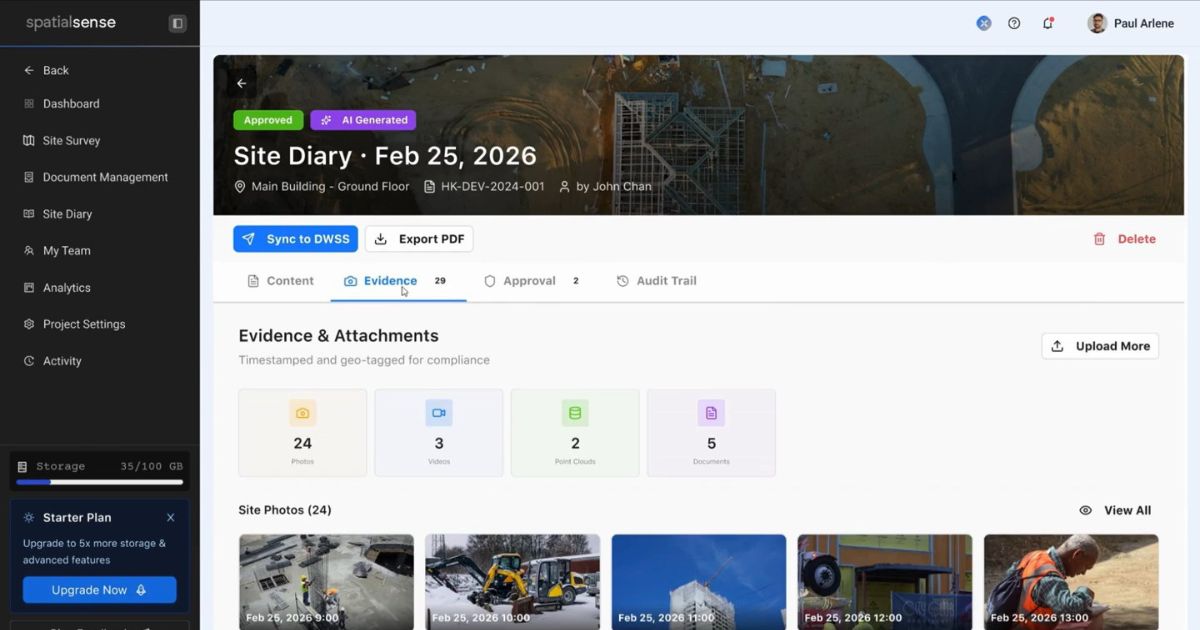
Revolutionizing Site Supervision Powered by SpatialSense’s Site Diary Feature
Mar 2, 2026
10 Construction Site Operations Powered by SpatialSense
Jan 29, 2026
Who Can Benefit from SpatialSense and How?
Dec 30, 2025
Smarter O&M with Temperature Data & Digital Twins
Nov 28, 2025